We read 974 one-star reviews across the three biggest shavers on Amazon and counted what they were about. Including the best overall, the best under $100, the best for a swirling neck, and the one that is really a subscription.
Across the three highest-volume electric shavers on Amazon there are 974 one-star reviews. We
filtered every one of them by keyword and counted what they are about.
The answer is not the shave. On the Panasonic ARC5, 42 of 516 one-star reviews mention charging
and 37 mention the battery — against 20 for irritation and 14 for noise. On the Braun Series 5,
53 of 379 mention charging. Power beats performance as a complaint on every model we checked.
That reframes the purchase. You are not really choosing between shaves in this category; the
difference between a $90 shaver and a $350 shaver at the skin is smaller than either brand would like.
You are choosing a machine that has to survive daily water exposure with a sealed non-replaceable
lithium cell inside it, and the reported failures cluster at two and a half to three and a half
years — just past the two-year warranty every major brand offers.
Two things decide the rest: whether your beard grows in one direction or swirls, and whether you
are willing to pay a cleaning-station subscription for the rest of the machine’s life. We will take
those in order.
Foil or Rotary Is Decided by Your Neck
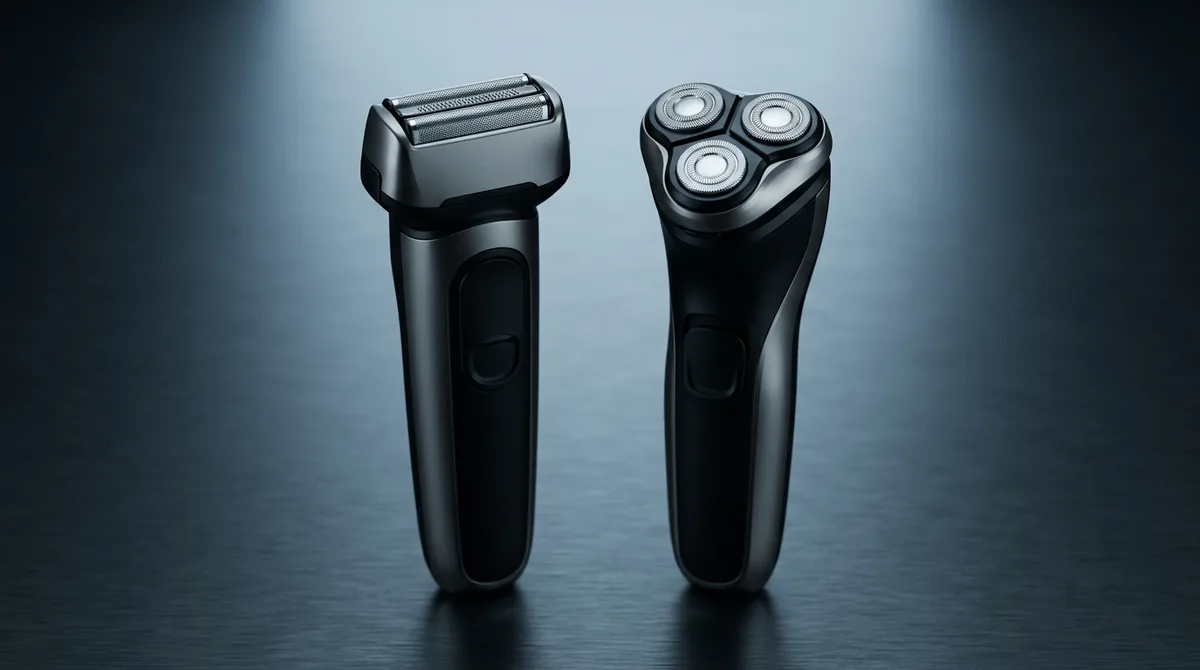
A foil shaver runs oscillating cutter blocks side to side behind a thin perforated screen, driven
by a linear motor at ten to fourteen thousand cycles a minute. A rotary runs circular blades behind
slotted discs at much lower speed and much higher torque. Foil is a lawnmower; rotary is a floor
polisher.
That difference decides which one suits you. Price has nothing to do with it. Foils cut
flat-lying, straight-grained hair efficiently when pushed against the grain; rotaries catch hair
growing in several directions at once, because the circular motion does not care which way any
individual hair points. The neck is where most men’s hair swirls, which is why the neck is where
most men’s electric shaves go wrong.
Here is how to find out which you are, and it costs nothing. Stop shaving for two or three days,
then run a hand across your face and neck in several directions. If a zone feels smooth one way and
prickly in the exact opposite direction, that is straight grain — buy a foil. If it feels prickly
whichever way you go, or the direction changes every inch, that is a swirl — buy a rotary.
Do that before reading any further. It is worth more than every specification below.
What Actually Determines Closeness
Four things matter and one does not.
Foil or disc thinness sets the hard limit. The metal between blade and skin is the closest you can
physically get, and engineering a thinner screen that does not tear is where the money in this category
goes.
Motor speed matters next. A fast motor shears a hair cleanly instead of tugging it, which is what
lets you press the head flush without pain. Pre-trimmers matter third: a hair lying flat against the
skin never enters a foil hole at all, and the middle cassette exists to lift it.
Cutting-element count has diminishing returns past four or five. Every element after that mostly
makes the head bigger, which is a problem under the nose rather than a benefit anywhere.
Pivoting heads are marketing. A pivot does not cut closer than a static head held properly against
the face — it compensates for a lazy wrist angle. Useful, but not a reason to spend more.
Wet Shaving With an Electric Makes It Less Close
This one is counterintuitive and worth saying plainly: gel and foam do not improve closeness. They
are a physical barrier the motor has to push through, and wet hair swells and lies flatter than dry
hair does. The closest electric shave you can get is a dry one.
What foam does improve is comfort. It lubricates, cuts friction against the foil and reduces the
heat that causes most electric-shaver irritation. That is a legitimate trade and plenty of men should
make it — just make it knowingly.
One caveat: only high-torque machines tolerate thick lather without the motor bogging down. The
Panasonic ARC5 and the Braun Series 9 handle it. Cheaper shavers lose speed, and a slow blade tugs.
Irritation Is Heat, Not Sharpness
Electric-shaver irritation has two causes. Dull blades that pluck rather than cut, and heat —
metal oscillating against metal ten thousand times a minute generates it, and pressing harder generates
more. Most men who complain about burn are pressing.
The technique that fixes it is unglamorous. Shave dry and shave before you wash, while the
skin is still taut and its own oils are intact. Use no pressure. Short strokes, against the grain.
The adjustment period men describe is real and takes two to four weeks. A blade slices hair below
the skin at an angle and mechanically exfoliates the epidermis on every pass; an electric shears at the
surface. The skin needs time to recover and the hairs need time to grow back at their natural angle
rather than the one a blade forced.
If you quit at day five, you quit during the worst of it.
The Running Cost Nobody Puts on the Box
Manufacturers publish replacement intervals and they are not suggestions — a worn foil is
exactly the dull blade that causes the plucking above. Braun says replace the whole cassette every 18
months. Panasonic says outer foil at 12 months, inner blades at 24. Philips says heads every 12 months.
Budget roughly $40 to $100 a year in parts depending on brand and model, plus $20 to $30 a year in
cleaning fluid if you use a station. Over a three-year life, consumables can equal the price of the
shaver.
On the stations themselves: they are useful and they are a subscription. The useful part is real
— brushing does not remove the skin cells and sebum that dull a blade, and the solution contains a
light machine lubricant, which reduces exactly the friction heat that burns necks.
The subscription part is also real, and Braun’s is the sharpest version of it: the alcohol-based
solution evaporates from an opened cartridge in about a month whether or not you run a cycle. You can
get most of the benefit with liquid soap and a weekly drop of mineral oil. The station buys discipline,
not chemistry.
Grooming Scores are anchored to the top pick’s buyer sentiment and step down 0.2 per rank. Sample size counts for more than star average.
What We Counted, and What It Means
Amazon lets you filter reviews by star level and keyword, which means the complaint distribution in
any category is countable if someone bothers. Nobody in this one does. Here is ours, taken on August 23
across the one-star reviews only.
| Model | 1★ reviews | “charge” | “battery” | “irritation” | “loud” |
|---|
| Panasonic ARC5 ES-LV65-S | 516 | 42 (8.1%) | 37 (7.2%) | 20 (3.9%) | 14 (2.7%) |
| Braun Series 5 5120s | 379 | 53 (14.0%) | 27 (7.1%) | 10 (2.6%) | — |
| Philips Norelco 7800 | 79 | 20 (25.3%) | 4 (5.1%) | — | — |
Two readings, and the second one matters more than the first.
The obvious one: power complaints dominate. On the Panasonic, charging plus battery plus
“died” together outnumber irritation and noise combined. Sixteen of its one-star reviews use
the word died, and one from August is specific about the mechanism — seven months in, the switch
stopped working, and when the owner opened it up he found “the
circuit board was wet, the interior with an inner layer of soap scum”. That is water ingress,
which is the failure mode nobody shops for.
The less obvious one: the Philips number is different in kind and we are not going to flatten it to
make a neater table. A quarter of its one-star reviews mention charging, but the most common version is
not a dead battery — it is that the box ships without a charger. “comes
with no way to charge it out of the box...this is ridiculous...you need to have a usb-a”. That is
a packaging decision generating one-star reviews about a shaver that works fine.
Which is the practical lesson for reading any listing: a star average tells you how many people were
unhappy, and only the text tells you what they were unhappy about. Those are not the same question.
What to Buy for Your Face
Very coarse, dense hair wants torque. The Panasonic Arc5 and Arc6 shear through it without bogging,
and this is the one case where the expensive machine genuinely does something the cheap one cannot. A
low-torque rotary is the wrong tool here, and it is where the Philips complaints concentrate — not
the neck, where rotaries are mechanically better, but density.
Fine or sparse hair does not need a $300 motor and never has. A Braun Series 5 clears it comfortably,
and the money saved is better spent on replacement foils, which is the variable that actually determines
how the shave feels in year two.
A shaved head is a different geometry problem. A skull is a series of hard compound curves, and
independently flexing rotary discs track it in a way a rigid foil block cannot. Buy a dedicated head
shaver or a high-end rotary; do not try to do it with a foil.
Where This Sits in a Routine
If a blade is destroying your neck, an electric is one answer and technique is the other. Our
safety razor ranking covers the wet-shave version of the same
problem, and most razor burn is angle and pressure rather than equipment. The recovery step does more
for how your neck looks than the machine does: see
post-shave repair and our
shaving and beard product ranking. If you are
growing it out instead, beard oil is the next page.
Foil or rotary — which should I buy?
It depends on your beard grain, and you can find out in three days. Stop shaving, then run a hand across your face and neck in several directions. If a zone feels smooth one way and prickly in the exact opposite direction, you have a straight grain and a foil shaver will suit you. If it feels prickly whichever way you go, or the direction changes every inch, you have a swirl and a rotary will do better — particularly on the neck, where most men’s hair grows in multiple directions. Price is irrelevant to this decision.
Does shaving with gel or foam give a closer electric shave?
No, it gives a more comfortable one. Foam is a physical barrier the motor has to work through, and wet hair swells and lies flatter against the skin than dry hair does, so the closest electric shave is a dry one. What lather does is lubricate the foil, reduce friction and cut the heat that causes most electric-shaver irritation. That is a real benefit and a reasonable trade — just be clear you are trading closeness for comfort, not getting both.
How long should an electric shaver last?
Reported failures cluster at two and a half to three and a half years, which is just past the two-year limited warranty all three major brands offer in the US. The usual culprit is the sealed lithium cell, which is not user-replaceable and loses capacity until it will not hold a charge. Water ingress is the second mode — one Panasonic owner who opened his after seven months found a wet circuit board and a layer of soap scum inside. Rinse the head, but do not submerge a shaver that is not rated for it.
Are cleaning stations worth it?
They are genuinely useful and genuinely a subscription, and both halves are true. Brushing does not remove the skin cells and sebum that dull a blade, and the cleaning solution contains a light machine lubricant, which cuts the friction heat that causes neck irritation. But Braun’s alcohol-based cartridge evaporates in roughly a month once opened whether you run a cycle or not, so the cost accrues whether or not you use it. Washing the head with liquid soap and adding a drop of mineral oil weekly gets you most of the way for nothing.
Why does my electric shaver irritate my neck?
Heat and pressure, in that order. Cutters oscillating ten thousand times a minute generate friction heat, and pressing harder generates more of it — most men who report burn are pressing. Shave dry and shave before you wash, while the skin is still taut and its own oils are intact, and use short strokes with no pressure at all. Also replace the foil on schedule: a worn foil plucks rather than cuts, and plucking is the other half of the problem.
How much do replacement parts cost per year?
Roughly $40 to $100 in parts depending on brand and model, plus $20 to $30 in cleaning fluid if you run a station. Braun specifies replacing the whole cassette every 18 months; Panasonic specifies the outer foil at 12 months and inner blades at 24; Philips specifies heads at 12 months. Over a three-year ownership, consumables can add up to roughly what the shaver cost. Factor that in before comparing a $90 machine to a $350 one — the gap narrows.